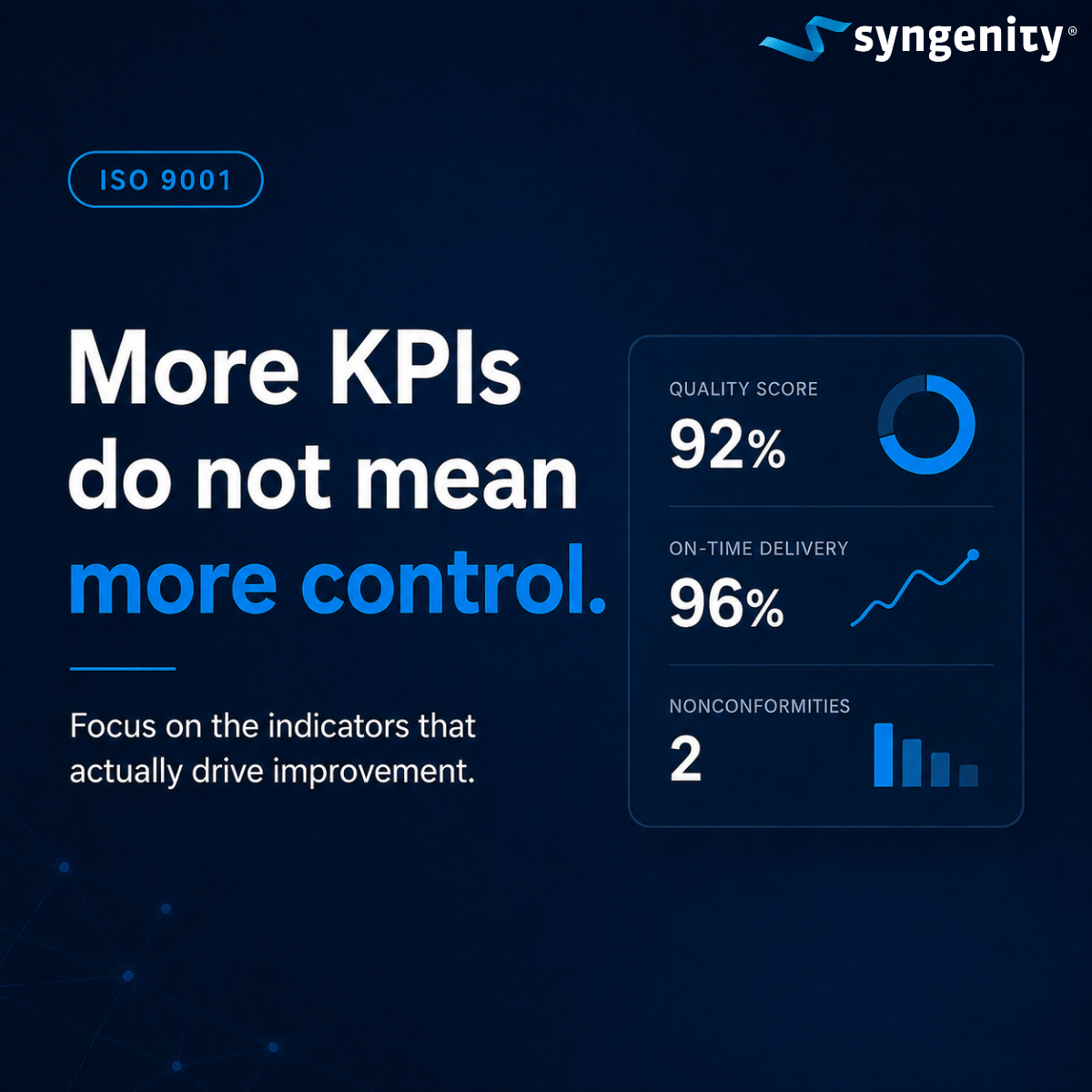
Meta Description: Learn how companies choose the right KPIs, define relevant metrics, and make better decisions based on their data. Choosing the Right KPIs: Why Fewer Metrics Lead to Better Decisions
Key performance indicators (KPIs) are intended to help companies identify trends, track goals, and make informed decisions. In practice, however, the opposite often occurs: dashboards contain an ever-increasing number of metrics, reports become more extensive, and those responsible spend a great deal of time collecting and preparing data. Nevertheless, it often remains unclear what specific decision should be derived from the information presented.
More metrics do not automatically lead to better decisions. An overloaded KPI dashboard can actually obscure relevant trends because truly important information gets lost among numerous less meaningful metrics. Therefore, the key is not to measure as much as possible, but to select the right KPIs and consistently align them with the company’s actual goals.
Why Companies Often Track Too Many Metrics
In many organizations, the number of key performance indicators (KPIs) has been growing over the years. A new metric is introduced for a project, a manager requests additional information, or an audit leads to the collection of additional data. Existing KPIs are rarely reevaluated or removed afterward.
This results in reports that may seem comprehensive but contribute only to a limited extent to management decision-making. Some metrics are tracked simply because they are technically available. Others remain in the reports because they have always been part of them. In some cases, key performance indicators are documented within the company solely because there is a perception that having as much data as possible demonstrates particularly professional management.
However, a key performance indicator is only truly useful if it answers a specific question. It should show whether a goal is being achieved, whether a risk is emerging, or whether action is needed. Without this context, a management tool can quickly become just another administrative task.
Selecting the Right KPIs and Linking Them to Goals
If you want to choose the right KPIs, you shouldn’t start with the available data. The starting point must be the company’s strategic goals. Only once it is clear what you want to achieve can you determine what information is needed to evaluate progress.
For example, if a company wants to improve customer satisfaction, it is not enough to simply track the number of complaints received. While this figure can provide an initial indication, it does not automatically explain how satisfied customers actually are. In addition, feedback from surveys, the recommendation rate, or the time it takes to resolve complaints may also be relevant.
The same principle applies here: Not every available metric needs to be included in the KPI system. It is important to select the metrics that have a clear connection to the goal and enable concrete decisions.
From Corporate Strategy to Measurable Metrics
Strategic business objectives are often initially formulated in general terms. Statements such as “We want to become more efficient,” “We want to improve quality,” or “We want to improve customer loyalty” set a direction but are not yet directly measurable.
To derive appropriate KPIs, the goal must be specified in concrete terms. What does efficiency mean in the process in question? Should processing time be reduced, should fewer resources be required, or should errors be minimized? The more precisely these questions are answered, the easier it is to define meaningful metrics within the company.
A suitable KPI should be understandable, influenceable, and capable of being evaluated on a regular basis. Furthermore, it must be clear which trends should be viewed as positive or negative. A metric whose meaning is interpreted differently by those involved provides only a limited basis for decision-making.
Define Responsibilities and Actions
A KPI alone doesn’t change anything. For each key performance indicator, therefore, it should be determined who monitors it, how often it is evaluated, and what happens in the event of a deviation.
If, for example, it is determined that the average processing time for a customer process has increased significantly, it must be clear who is responsible for analyzing the causes and implementing possible measures. Without this link between metrics, responsibility, and action, reporting remains passive.
Good KPIs, therefore, do more than just provide information. They trigger a structured response when necessary.
What Requirements a Good KPI Dashboard Should Meet
A KPI dashboard should draw attention to the most important information. It doesn’t need as many charts, colors, and tables as possible to do this. What matters most is a clear structure and a logical prioritization.
The metrics displayed should be relevant to the respective target audience. Management often needs different information than a process owner or an operational team. A one-size-fits-all dashboard for all levels can therefore quickly result in important information being omitted or the presentation becoming unnecessarily complex.
The timeliness of the data also plays a role. A monthly analysis may be sufficient for strategic planning, while operational processes may require shorter evaluation cycles. The reporting period should be based on how quickly a change needs to be identified and how quickly the company can respond.
A good KPI dashboard also shows whether a metric is within the specified target range. Individual numbers without a benchmark are often not very meaningful. Only by comparing them to target values, tracking trends over time, or using relevant benchmarks can you determine whether action is needed.
Common Mistakes When Working with Key Performance Indicators
A common mistake is to equate readily available data with relevant data. Just because information can be easily exported from a system doesn’t mean it contributes to corporate management.
Key metrics that focus exclusively on activity are also problematic. For example, the number of training sessions conducted does not necessarily indicate whether employees have understood the content or whether their behavior has changed. Similarly, the number of policies created does not automatically show whether the requirements set forth in them are actually being implemented.
Key performance indicators within a company should therefore, whenever possible, take into account not only the effort involved but also the impact. This often requires a combination of quantitative data and qualitative assessments.
Another mistake is failing to review the KPI system. If strategic business goals, processes, or operating conditions change, the corresponding key performance indicators must also be adjusted. A KPI that was highly relevant two years ago may have already lost its significance today.
Case Study: From 40 Key Metrics to Five Key Performance Indicators
A company prepares a comprehensive monthly report containing 40 different key performance indicators. Preparing the report takes several workdays. However, only a few of these metrics are regularly discussed during management meetings. For the majority of the collected data, there are neither defined target values nor established actions to be taken in the event of deviations.
As a first step, therefore, we examine which decisions were actually made in recent months based on the individual key performance indicators. We then compare these values with the company’s strategic goals and the most significant process risks.
In the end, five key KPIs remain, which are regularly reviewed by management. For each KPI, a target value, a person responsible, and a procedure for handling deviations are established. Other operational metrics remain the responsibility of the relevant teams but are no longer included in every management report.
The result is no loss of information. On the contrary: The new KPI dashboard is easier to understand, meetings are more focused, and deviations lead more quickly to concrete actions. This example shows why five consistently used KPIs are often more valuable than 50 numbers whose meaning no one can clearly explain.
Regularly review and refine KPIs
An effective system of key performance indicators is not static. Companies should regularly assess whether their KPIs still align with their current goals, risks, and decision-making processes.
Simple questions can help here: Is the metric actually being used? Does the target audience understand its significance? Can the company influence the trend being measured? Does a deviation lead to a decision or action? Is the effort required to collect the data reasonable in relation to the benefits?
If the answer to several of these questions is “no,” the metric should be adjusted or removed. Selecting the right KPIs therefore also means consciously eliminating metrics that no longer provide sufficient value for management purposes.
Conclusion: Choose the right KPIs instead of measuring as much as possible
The quality of a KPI system is not determined by the number of metrics it includes. What matters is whether the metrics are understood, regularly evaluated, and used to make specific decisions.
Companies that select the right KPIs establish a clear link to their strategic business objectives. They reduce unnecessary reporting efforts, make their KPI dashboard more user-friendly, and increase the likelihood that information will actually lead to action.
Few meaningful metrics within a company can provide more guidance than a comprehensive report without a clear focus. That’s why it’s better to use five KPIs that everyone involved understands and actively uses than to track 50 figures whose meaning and implications remain unclear.
Syngenity® GmbH helps organizations translate their strategic goals into appropriate metrics, review existing KPI systems, and develop reporting structures that enable meaningful decision-making.
Would you like to find out which key metrics are truly relevant to your organization? Contact us and turn your reporting into an effective tool for management and improvement.