Myth 1: ISO 27001 is just documentation
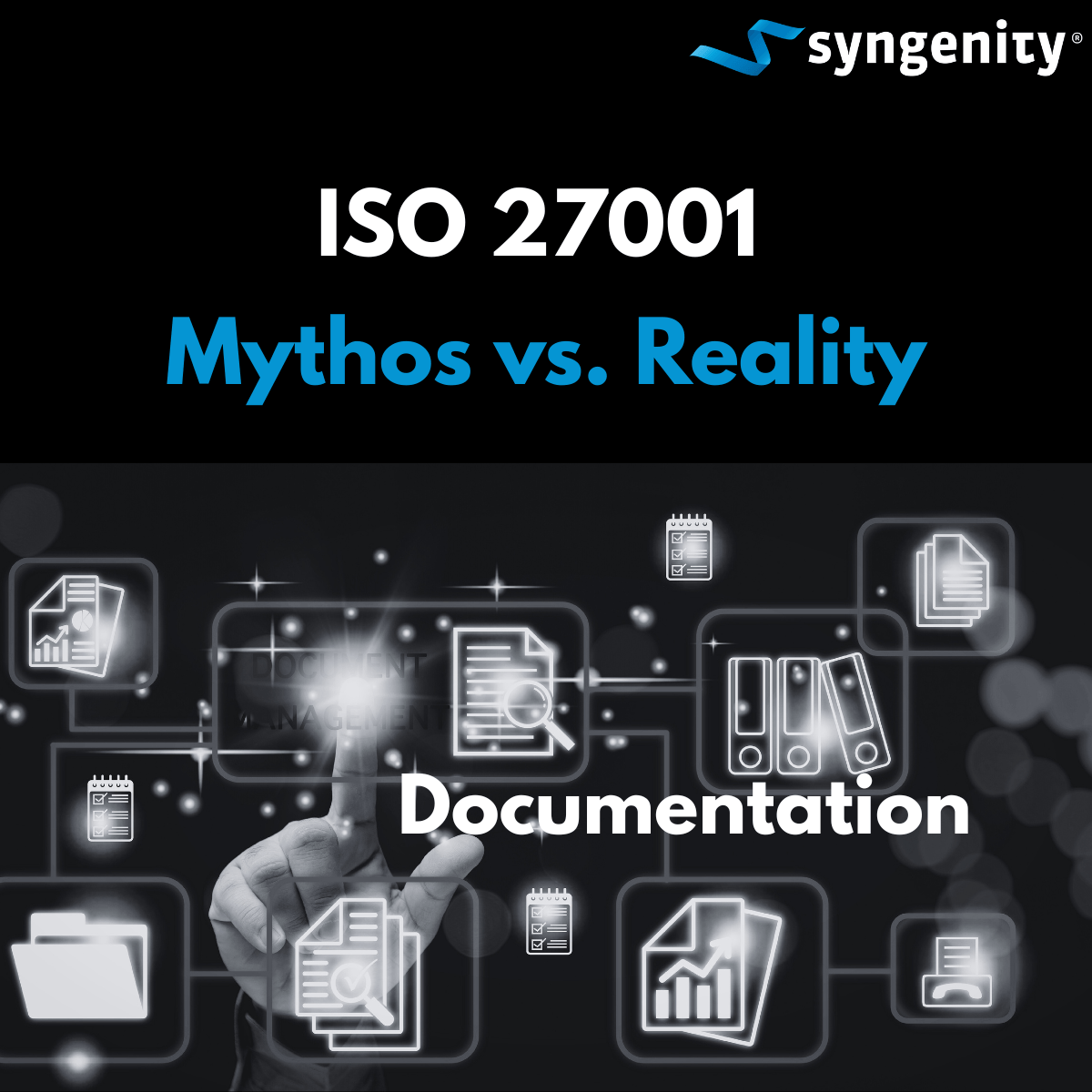
In many companies, the idea persists that ISO 27001 is essentially a documentation project. The impression is often created that the existence of policies, procedures and records is sufficient to fully meet the requirements of the standard. This myth leads organizations to invest a considerable amount of energy in creating extensive documents without considering the actual purpose and added value of an information security management system.
The reality is much more complex. Although documentation is a necessary component of the standard, it is not the core of ISO 27001. Rather, it is the visible result of a functioning and practised management system. The documents are intended to support management, control and continuous improvement. However, they do not replace the professional discussion of risks, measures and responsibilities.
An effective information security management system is based on the systematic identification of information security risks. Companies must determine which assets are particularly worth protecting, where vulnerabilities exist and which threats are relevant. Only on this basis can a realistic risk assessment be carried out. The organization must understand the potential impact and the likelihood of this happening. This analysis forms the foundation for the selection of suitable security measures.
ISO 27001 therefore requires a risk-based approach that goes far beyond the mere creation of documents. A consistent level of security can only be achieved once risks have been systematically identified, assessed and dealt with. Documentation supports this process by recording framework conditions, processes and responsibilities in a structured manner and making them comprehensible. However, it is crucial that the content is actually put into practice and not just created for an audit.
In practice, however, the picture is often different. Documentation is often created solely with audits in mind. Guidelines are formulated because they are required, without any real benefit for day-to-day operations. Decision-making processes continue to be made independently of the ISMS, budget issues are decoupled from documented risk management, and operational processes are based on existing habits rather than systematically derived measures. This approach leads to formal but not practiced compliance.
However, ISO 27001 is not intended to create a parallel bureaucracy, but to establish an integrated management discipline. The standard is a tool for answering key information security questions. What information is critical for the business model? Where are the relevant risks? Which controls are appropriate and economically justifiable? These questions belong at the heart of a functioning ISMS. Only if they are considered consistently will there be a benefit for the organization.
Reducing ISO 27001 to documentation may create short-term formal compliance, but it misses the real value of the standard. The real strength of the standard lies in establishing information security as a strategic, organizational and technical discipline. It creates the basis for designing security in a targeted and comprehensible manner instead of relying on selective or reactive measures. Companies that view ISO 27001 merely as a documentation requirement are wasting this potential.
It is therefore worth sharpening our focus and interpreting ISO 27001 not as a collection of documents, but as a framework for the systematic management of risks. This can only succeed if the standard is embedded in the operational business. The risk analysis process must take place regularly and have a noticeable influence on decision-making. Managers should be actively involved, as their priorities and budget decisions play a key role in determining how effectively security measures can be implemented. The ISMS should be designed in such a way that it provides a comprehensible basis for these decisions.
This also increases the value of the documentation. If guidelines are not only written to fulfill a requirement, but also reflect concrete working methods, a stable and comprehensible framework is created. Procedures that clearly define how risks are assessed, incidents reported or changes checked support a reliable level of safety. Records are then no longer used as proof for an auditor, but for transparency and traceability within the company.
The first step is to question the myth and see information security as a management issue rather than a documentation task. A functioning ISMS is a living process that takes risks seriously, selects targeted measures and monitors their effectiveness. Documentation is a tool, but never the end.
In the next article, we will look at Myth 2: Risk assessment, because here too there are numerous misunderstandings that stand in the way of effective implementation.
Syngenity® GmbH supports companies in making information security effective and practical. If you would like to further develop your ISMS or introduce ISO 27001, please contact us.