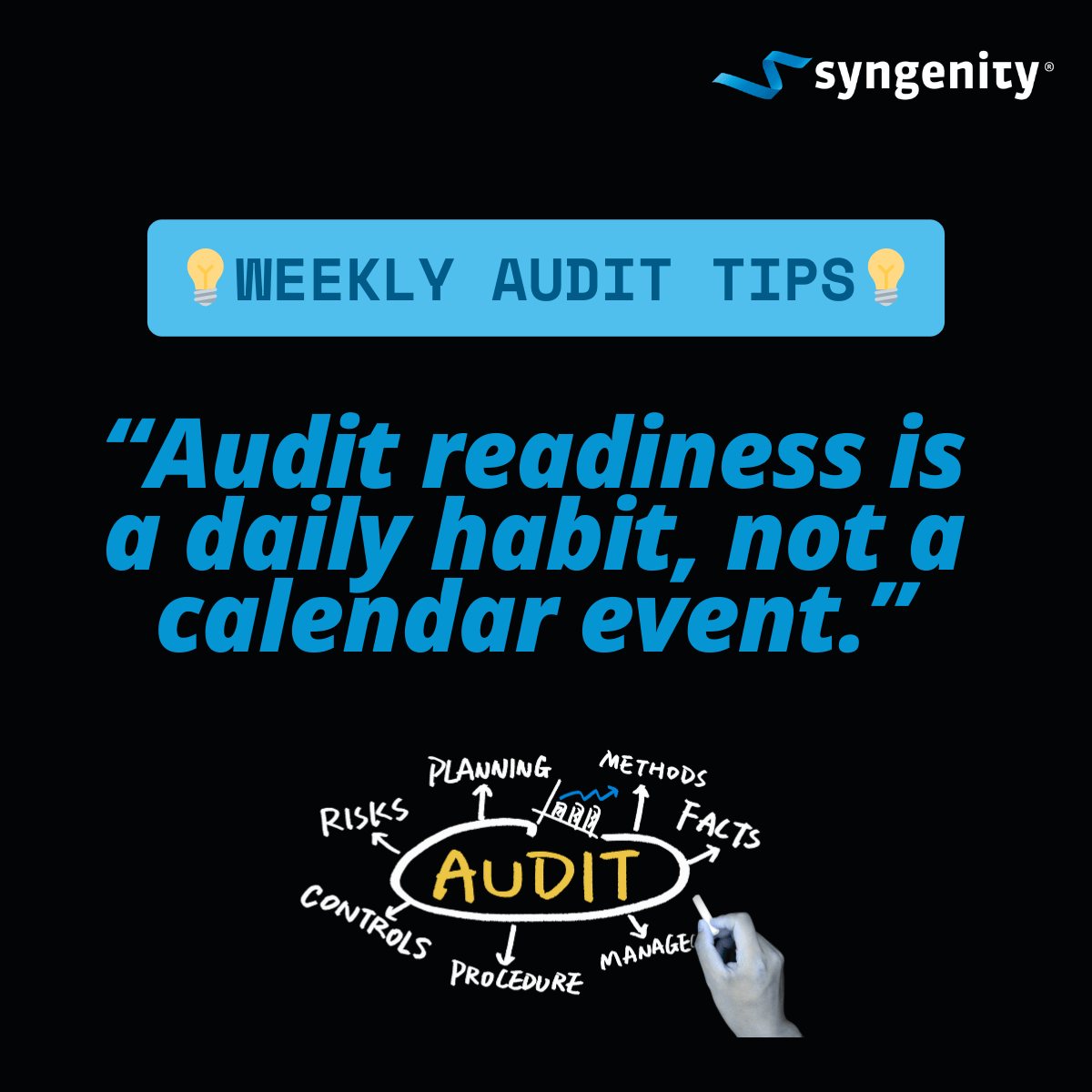
Audit Tips Vol. 4: Audit Readiness
Audit readiness is not a one-off task, but an ongoing component of effective corporate management. Nevertheless, many organizations still treat audits as an exceptional annual event. When the audit is suddenly on the doorstep, a hectic rush breaks out, documents are updated at the last minute, evidence is gathered and processes are explained in an improvised manner. This reactive attitude not only reduces the quality of the audit, but also prevents companies from deriving real governance and compliance benefits from their day-to-day work. A modern, professional approach, on the other hand, views audit readiness as a daily working mode, embedded in transparent processes, practiced responsibilities and a culture of continuous improvement.
In essence, audit readiness means that a company is able to demonstrate the status of its processes, evidence and controls in a comprehensible manner at all times. This presupposes that all relevant processes already function in day-to-day business in such a way that they are audit-proof. A control process that only exists on paper is worthless. A guideline that is not kept up to date does not fulfill its function. And a risk that is not documented or tracked cannot be assessed if necessary. That’s why true audit readiness is based on four key pillars: controls in action, continuous evidence generation, ongoing monitoring of risks and events and up-to-date documents.
Active controls are the most important factor when it comes to establishing a functioning management system. Controls that are merely described in theory shortly before an audit or added to retrospectively offer neither stability nor orientation. They must be firmly anchored in the daily routine and clearly recognizable for all employees concerned. This includes clear responsibilities, unambiguous process steps and comprehensibility that emphasizes the practical benefits. If controls are designed in such a way that they actually help employees instead of burdening them, this automatically results in higher process quality, which is reflected positively in every audit.
The continuous generation of evidence is just as important. A common problem arises when teams only create evidence when an audit is imminent. However, this subsequent reconstruction is error-prone, inefficient and risky. It is much more expedient to automatically maintain evidence in the course of daily work. This can be achieved through system-supported logging, regular reviews, automated monitoring mechanisms or fixed checklists. This creates authentic documentation that reflects the actual day-to-day work and reliably shows that processes are being adhered to on a permanent basis.
Risk management also plays an important role. Risks, incidents, changes or new dependencies must be tracked and evaluated promptly. An audit not only checks the status of a system at a certain point in time, but also wants to understand whether the company is responding systematically to changes. Regular risk analyses, structured incident processes and change management mechanisms are therefore essential. Companies that document, evaluate and reflect changes in their processes demonstrate a high degree of maturity and professionalism. This not only makes audits easier, but also makes the organization itself more resilient.
Another key aspect of audit readiness is the timeliness of documentation. Outdated or contradictory documents are among the most common reasons for audit deviations. Many companies only update guidelines when it is absolutely necessary. Documentation should be seen as a tool that remains precise, clear and usable at all times. A policy that employees do not know or do not use does not fulfill its purpose. An effective documentation process ensures that those responsible regularly check whether content is still up to date, whether processes have changed or whether new regulatory requirements need to be taken into account. Such reviews must be firmly embedded in annual or quarterly governance.
When audit readiness becomes a lived habit, the character of an audit changes fundamentally. A stressful checkpoint becomes an opportunity to demonstrate the maturity of a company. For customers and partners, audit-ready compliance is a strong signal of trust. An organization that is audit-ready at all times conveys stability, reliability and professionalism. In addition, audit-ready processes provide a better basis for decision-making: data is available in full, responsibilities are clearly defined, risks are assessed in a structured manner and opportunities for improvement are identified more quickly.
Syngenity® supports companies in doing just that. Many organizations are still in a reactive mode, characterized by spreadsheets, short-term reconciliations and scantily compiled evidence. This approach ties up considerable resources, leads to avoidable stressful situations and reduces audit quality. Syngenity® helps companies to overcome this situation and establish a proactive, structured and permanently functional compliance environment.
Getting there starts with audit-ready processes and controls. Syngenity® analyzes existing processes, identifies gaps and develops practical, implementable control mechanisms that work in day-to-day business and can be seamlessly integrated. The focus is not on merely fulfilling a standard, but on establishing a system that actually helps the company to work more efficiently and safely.
In the next step, Syngenity® supports the introduction or further development of management systems, for example in accordance with ISO 27001, TISAX, ISO 9001 or industry-specific requirements. Particular emphasis is placed on pragmatic solutions that fit the size and structure of the respective company. An oversized system creates unnecessary complexity, while a system that is too simple offers no stability. The optimum balance is achieved through clear rules, comprehensible processes and appropriate documentation.
Another focus is on promoting a corporate culture in which audit readiness becomes part of daily activities. Syngenity® helps to define roles and responsibilities, provide training and raise awareness of the importance of compliance. The better employees understand why certain controls and processes are necessary, the greater the acceptance and the more reliably requirements are fulfilled. This creates an environment in which audit readiness is no longer perceived as a burden, but as a normal part of professional working practices.
For companies that take this step, the perception of audits changes completely. An audit is no longer experienced as a crisis, but as an opportunity to see their own performance confirmed. With structured processes, automated evidence, clear documentation and a culture of continuous improvement, lasting audit readiness is created.
Anyone who wants the next audit to be a confirmation rather than a surprise will find an experienced partner in Syngenity®. The aim is not just to meet formal requirements, but to build an organization that works sustainably, safely and efficiently – every day, not just on the audit date.