Internal audit vs. external audit – why both are crucial for a strong governance framework
Companies today are faced with a growing number of regulatory requirements, increasing security risks and ever more complex business processes. In this environment, audits play a central role in building trust, creating transparency and ensuring long-term organizational resilience. However, it is often underestimated how different internal and external audits are and what contribution both make to a robust governance framework. They complement each other in their impact and together offer companies a comprehensive view of effectiveness, security and compliance.
The term audit is often associated with external, independent audits. However, internal audits are just as essential. They not only serve to prepare for certifications, but also help to continuously improve processes, identify risks at an early stage and further develop internal controls in a targeted manner. A governance system that relies solely on external audits often remains reactive and only recognizes weaknesses once they have already had an impact. A company that consciously establishes internal audits, on the other hand, anchors continuous improvement and a systematic understanding of risks in its corporate culture.
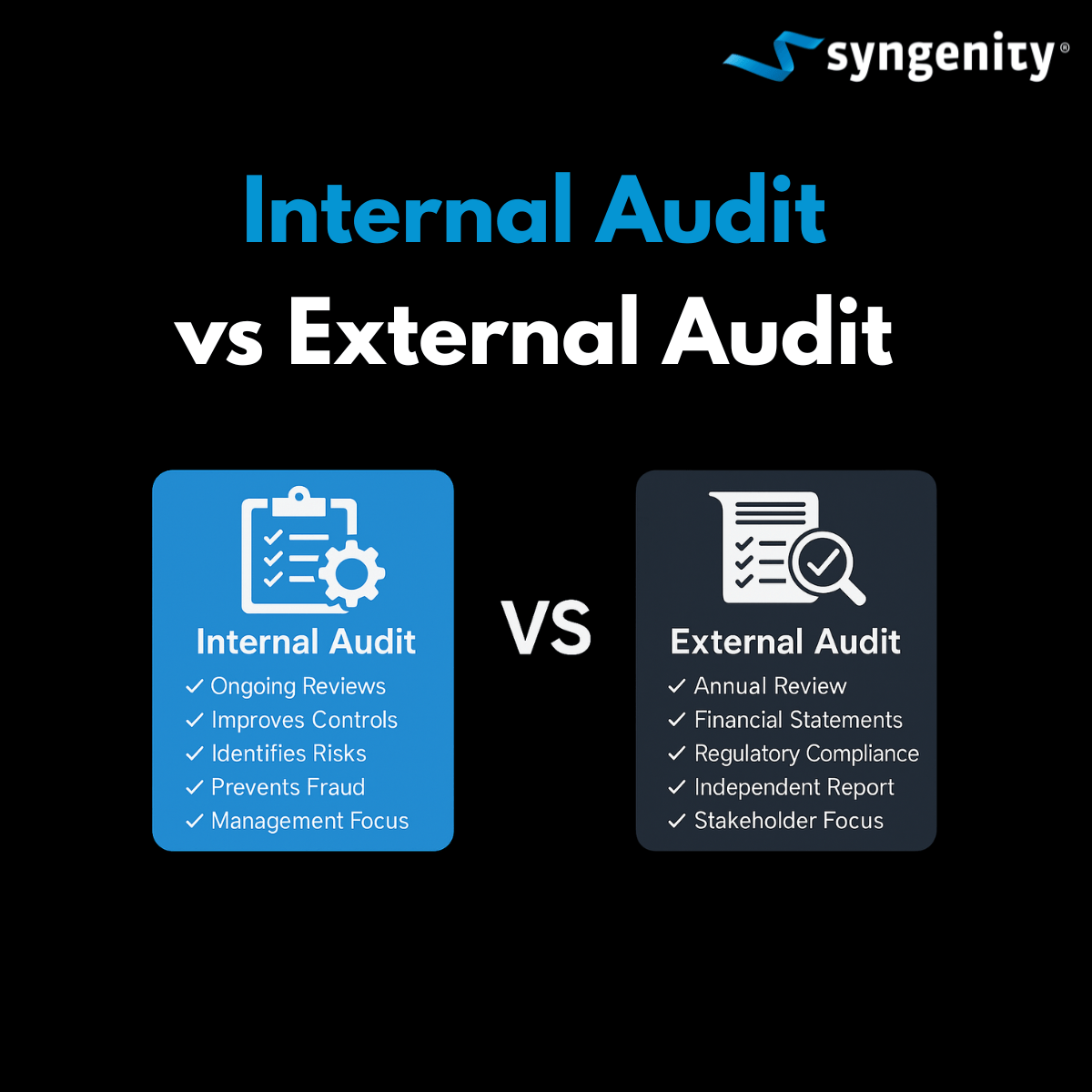
Internal audits are therefore an essential part of a functioning management system. They are carried out regularly and independently of operational activities to ensure that processes are working as planned. The focus is on quickly identifying weaknesses, making potential risks visible and supporting the establishment of effective controls. Internal audits also help to identify misconduct or fraud at an early stage before it results in major economic damage. Their aim is to provide company management with certainty about the functionality of its own system and to identify potential for improvement.
This contrasts with external audits, which are mainly carried out by independent, qualified bodies such as certification organizations or auditing firms. Their main task is to assess compliance with formal standards, regulatory requirements or legal guidelines. External audits usually take place at regular, often annual, intervals and offer an objective view from the outside. This creates trust among stakeholders, investors, customers and partners, as the assessment is independent. Particularly in the area of financial audits or management systems such as ISO 27001, TISAX or ISO 9001, external audits are important proof that a company is working responsibly and in compliance with regulations.
While internal audits are strongly geared towards continuous improvement, external audits focus on objective proof of conformity. Both perspectives are important, as internal audits enable a deeper, organization-specific view, while external audits provide a neutral assessment. Companies therefore benefit most when they integrate both forms of audit into their governance framework in a clearly structured way.
A look at the function of both types of audit illustrates this addition. Internal audits regularly check the effectiveness of internal processes and show whether controls are actually working and whether risks are being managed appropriately. The flexibility of internal audits allows specific topics to be examined in greater depth, such as IT security, data protection, supplier processes or project management. External audits, on the other hand, are more standardized and serve to confirm the requirements of a standard, a law or a regulatory framework. They are indispensable for obtaining certifications or complying with legal obligations to provide evidence.
A well-coordinated interplay of both types of audit also strengthens a company’s compliance structure. Internal audits not only prepare for external audits, but also ensure that processes remain stable in the long term and are not just optimized in the short term for an audit. External audits, in turn, create incentives to comply with standards and continuously develop them further, as they are regularly reviewed. Together, they ensure that both the internal functionality and external credibility of a company are guaranteed.
Syngenity® GmbH supports companies in preparing for both internal and external audits. This includes the development of clear processes, the creation of meaningful documentation, the structuring of audit evidence and the systematic introduction of an effective audit program. Many organizations find it difficult to link requirements such as ISO 27001, TISAX, ISO 9001 or the GDPR with internal structures. Syngenity GmbH supports companies in transforming these requirements into consistent and audit-proof processes while increasing efficiency.
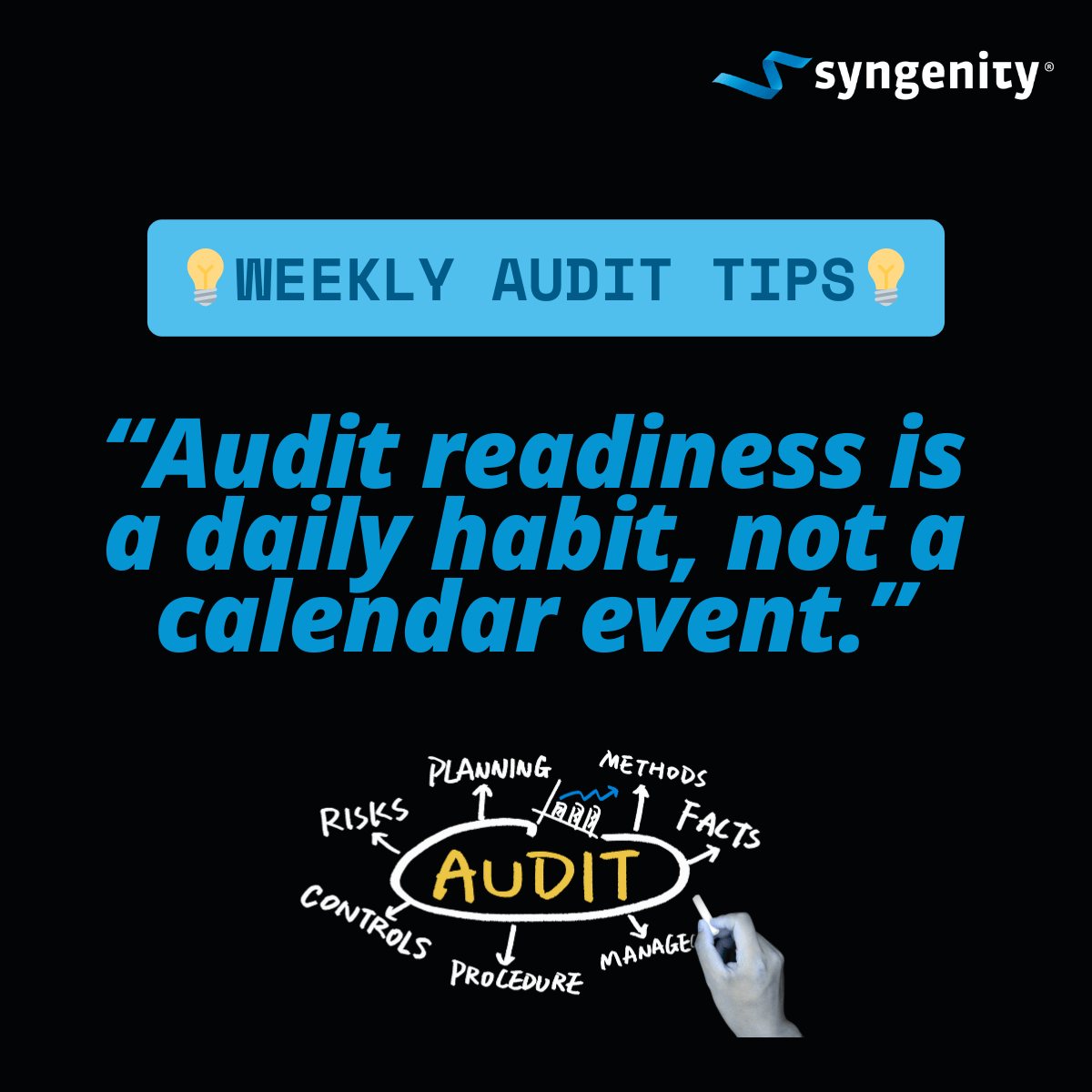
Audit readiness means more than just having documents ready. It includes a structured understanding of risks, a clear process landscape, defined responsibilities and a functioning ISMS or QMS. A sustainable compliance ecosystem can only be created if internal and external audits are coordinated. Companies that use both types of audit create a culture that promotes transparency and actively manages risks instead of suppressing them.
The value of both types of audit is particularly evident in the context of information security. Internal audits help to identify weaknesses in IT systems, processes and organizational structures at an early stage. External audits, for example as part of an ISO 27001 certification, then check these structures independently and confirm their effectiveness. This interaction increases resilience to cyber attacks and helps companies to build the trust of customers and partners.
Organizations that want to improve their audit processes or need support in preparing for certification benefit from structured methods, clear processes and professional support. Syngenity GmbH offers comprehensive support to efficiently design audit landscapes, better manage risks and ensure long-term compliance.
If you want to strengthen your audit processes, expand your internal expertise or are about to be certified, Syngenity® GmbH is a competent partner who will support you every step of the way.