Home office security is now a critical factor for companies that want to enable modern and flexible work. More and more employees are no longer performing their tasks exclusively in the office, but from home or on the go. This is fundamentally changing traditional security architecture. What used to take place within clearly defined corporate boundaries is now spread across many individual workstations. This is precisely where the topic of home office security comes into play.
As the use of remote work increases, so does the attack surface for cybercriminals. Every single workstation becomes a potential entry point. Often, it is not complex technical vulnerabilities but simple oversights in daily routines that increase risks. An unsecured Wi-Fi network, missing updates, or careless handling of login credentials can be enough to put sensitive information at risk. That is why it is all the more important for companies and employees to take joint responsibility and actively prioritize security.
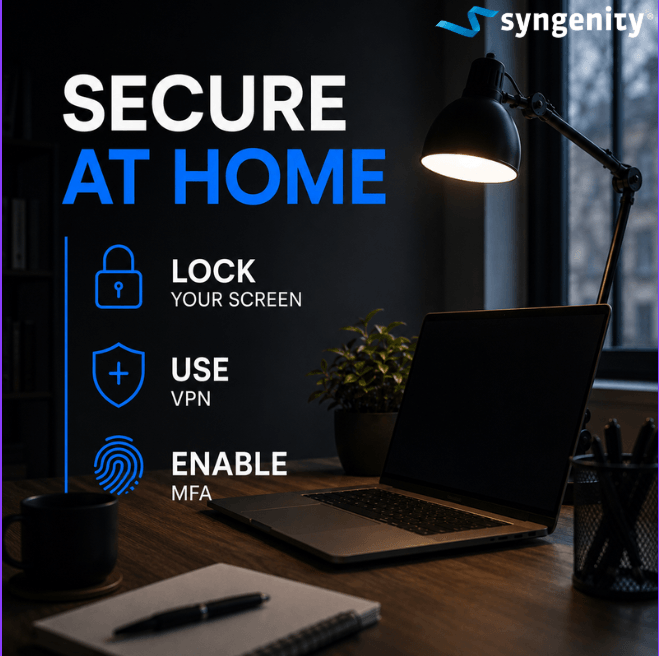
Many of the most effective measures for home office security are surprisingly easy to implement. One basic but often underestimated measure is locking the screen. Anyone leaving their workstation should consistently secure access to open applications. Even in a private setting, unauthorized viewing can occur, posing a risk. This practice is easy to adopt and has a direct impact on the security of sensitive data.
Another key component is the use of secure connections. Access to company systems should always be via encrypted channels. A Virtual Private Network ensures that data is transmitted securely. This is essential, especially when employees use different networks. In this context, home office security also means defining clear rules for accessing company resources and ensuring compliance with them.
Securing user accounts is just as important. Passwords alone no longer provide sufficient protection. Multi-factor authentication adds an extra layer of security to the login process. Even if a password falls into the wrong hands, access remains protected. This measure is now one of the most effective ways to prevent attacks and should be an integral part of every security strategy.
In addition to technical solutions, employee awareness plays a key role. Secure remote work can only function reliably if everyone involved understands the importance of security and takes it into account in their daily work. Training and regular awareness campaigns are therefore essential. Employees should learn to recognize typical threats, such as phishing, early on and respond appropriately. Knowledge reduces uncertainty and fosters personal responsibility.
The organization itself also bears significant responsibility. Clear guidelines and straightforward processes help ensure that safety is not viewed as an additional burden, but rather as an integral part of daily work. Managers should lead by example and demonstrate that safety measures are consistently implemented. Open communication also encourages a willingness to address potential risks and find solutions together.
Security in the home office is therefore much more than just a technical issue. It is a combination of technology, behavior, and corporate culture. Companies that adopt this holistic approach create a solid foundation for secure work in an increasingly digital and decentralized world. Even small measures can have a significant impact if they are consistently implemented.
In summary, security in the home office is a fundamental prerequisite for sustainable business success. Companies that invest early in secure processes, clear guidelines, and well-trained employees minimize risks while simultaneously building trust in digital work models. Security doesn’t start in the data center—it starts at every single workstation.