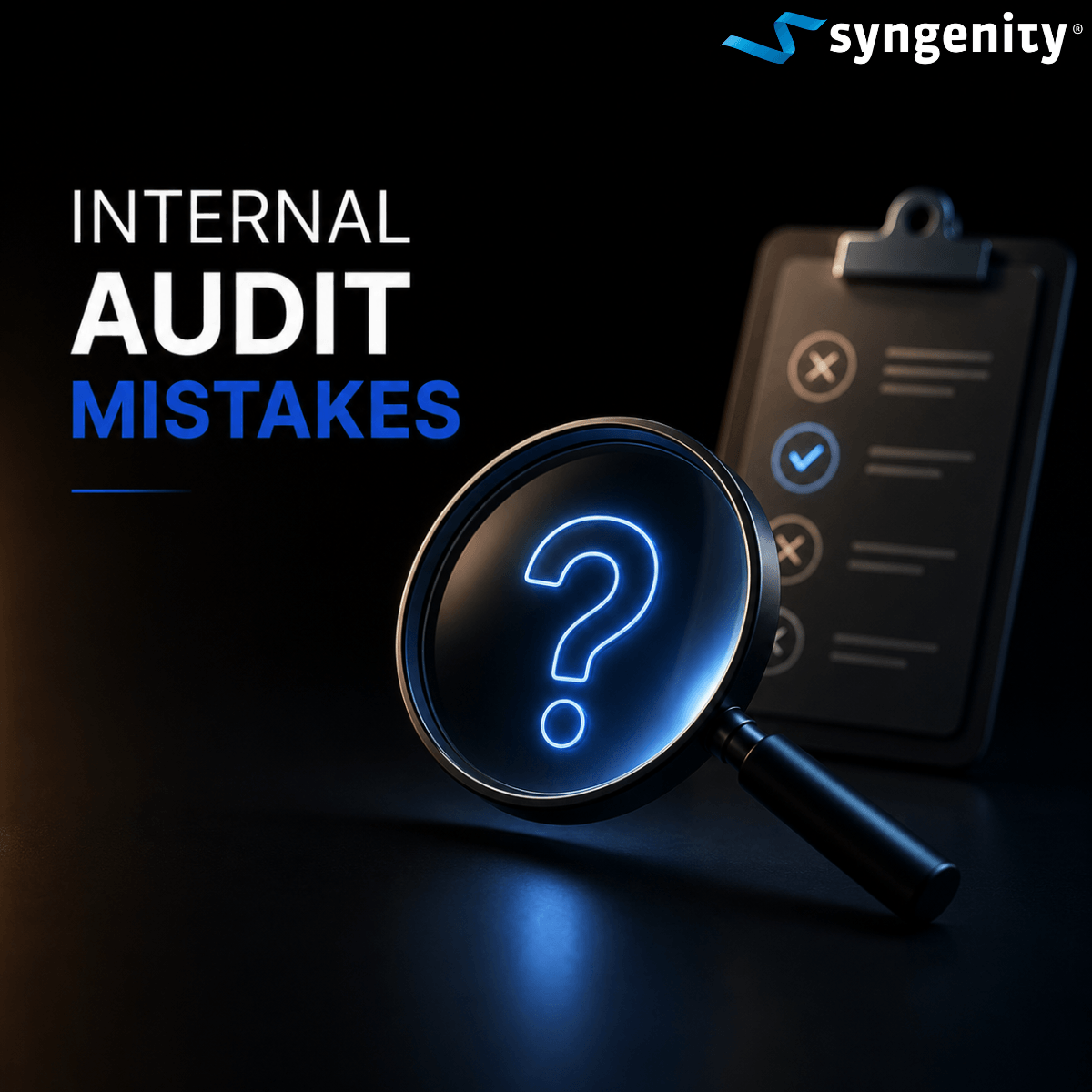
Internal audits are one of the most important tools of an effective management system. They help companies to identify weaknesses at an early stage, reduce risks and continuously improve processes. Nevertheless, many an audit fails long before the actual audit report is produced. The reason for this is usually not a lack of checklists or inadequate documentation, but rather the approach to the audit itself.
One of the most common mistakes is to regard an audit merely as a compulsory exercise. The audit is carried out because the standard requires it, not because the company wants to learn from it. Questions are asked, evidence is collected and reports are produced, but there is often no real added value. An audit should be much more than simply fulfilling a requirement. It offers the opportunity to critically scrutinize processes and uncover potential for improvement before serious problems arise.
Another common mistake is to focus exclusively on documents. Of course, guidelines, procedures and evidence are important components of a management system. However, an audit should never end with a document review. Processes can look excellent on paper and yet be implemented very differently in day-to-day work. That is why a good audit not only looks at the documentation, but also at actual practice. It checks whether employees know their tasks, whether defined processes are being adhered to and whether the defined measures are actually effective.
Equally problematic is an audit that focuses solely on working through issues without understanding the underlying risks. Every measure, every policy and every process exists for a reason. An effective audit therefore not only questions whether a requirement is fulfilled, but also which risk is to be reduced as a result and whether the measure actually fulfills its purpose. Particularly in the ISO 27001 and TISAX® environment, a risk-based audit approach is crucial in order to realistically assess the effectiveness of a management system.
Another weakness of many companies is the lack of follow-up on audit findings. The audit often ends with the completion of the audit report. Findings are documented, measures proposed and responsibilities defined. However, the results are then forgotten. As a result, the same problems reappear in the next audit. An audit is only fully effective if the identified measures are consistently implemented and their progress is monitored. This is the only way to achieve genuine continuous improvement.
The perception of an audit by employees also plays a decisive role. Many employees associate an audit with control, criticism or the search for errors. This often leads to discussions being held cautiously and valuable information being lost. However, a successful audit should not be seen as an instrument of control, but as an opportunity for joint improvement. The best audits often don’t feel like traditional audits at all. Instead, they result in open and constructive discussions about what works well and where there is potential for optimization.
Internal audits are particularly important in the area of information security. It enables companies to identify security gaps at an early stage before they result in security incidents, customer complaints or costly deviations. A professionally conducted audit creates transparency, strengthens risk awareness and supports company management in making well-founded decisions.
Ultimately, an audit should never be seen as a chore. When carried out correctly, an audit is one of the most effective tools for improving processes, reducing risks and increasing transparency within an organization. Companies that see an audit as an opportunity for further development will benefit in the long term from more stable processes, greater security and a stronger organizational culture. Those who avoid the typical mistakes and focus on effectiveness rather than formalities will turn every audit into real added value for the company.
Do you need support with internal audits, preparing for ISO 27001 or TISAX® or setting up an effective audit program? The experts at Syngenity® GmbH will be happy to support you.