Regulatory requirements are increasing, while many organizations are operating with limited resources. Policies must be reviewed, evidence must be organized, and risks must be assessed in a transparent manner. This is precisely where artificial intelligence and subject-matter expertise can work together to create real added value. Solviqom combines technological innovation with practical experience in the areas of auditing, data protection, compliance, and information security.
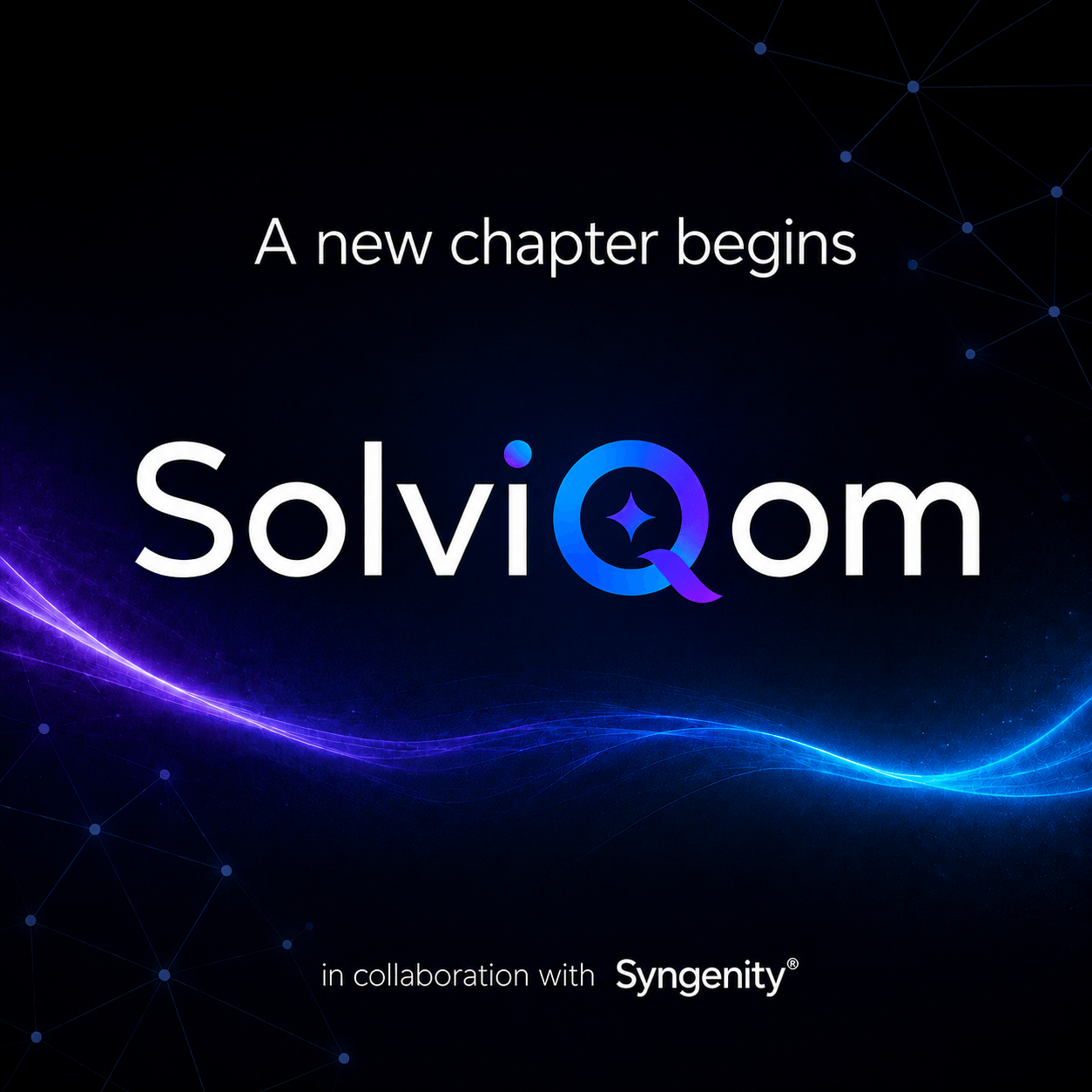
For Syngenity® GmbH, this development is a logical next step. Solviqom was founded in collaboration with the team behind AiAuditBuddy to develop intelligent solutions for complex requirements. The focus is on AI-powered compliance, digital audit processes, and the “human-in-the-loop” principle.
AiAuditBuddy served as the starting point for this development. The application was designed to help companies and consultants manage extensive lists of requirements. It helps organize documents and supporting evidence in a structured way, identify potential gaps, and streamline audit preparation.
With the founding of Solviqom, this approach is being expanded. AiAuditBuddy will remain the core product and will continue to be actively developed within the new company. At the same time, Solviqom is laying the groundwork for additional applications related to audits, certifications, risk management, and regulatory requirements.
The goal here is not to replace expert knowledge with artificial intelligence. Rather, the aim is to reduce repetitive tasks and make information available more quickly. This gives subject matter experts more time for tasks where experience, an understanding of the context, and sound judgment are essential.
Today, compliance officers must take into account a wide range of legal, contractual, and regulatory requirements. These include, for example, ISO/IEC 27001, the NIS 2 Directive, the EU AI Act, industry-specific guidelines, and individual customer requirements.
In many companies, these requirements are still managed manually in spreadsheets, documents, and various systems. This leads to data inconsistencies, duplicate work, and uncertainty regarding the current status of processing. AI-powered compliance can help structure content more quickly, reveal connections, and identify potential discrepancies early on.
For example, an AI application can check whether submitted documentation generally meets a requirement or whether important information is missing. It can compare similar requirements from different sets of regulations, thereby reducing redundant work. However, the final assessment remains the responsibility of the relevant experts.
When preparing for an audit, companies often have to compile numerous policies, procedures, protocols, and other supporting documentation. At first glance, the collection of documents often appears to be complete. During the audit, however, it is not uncommon to discover that documents are outdated, misfiled, or have not been clearly approved.
Digital audit processes can make this workflow more transparent. Requirements, responsibilities, supporting documentation, and processing statuses can be linked together. This makes it easier to quickly identify which information is already available and where action is still needed.
One practical use case is preparing for ISO/IEC 27001 certification. Instead of repeatedly comparing each requirement manually against different documents, an AI-powered solution can perform an initial structuring. The person in charge then verifies whether the proposed supporting evidence is indeed appropriate, up-to-date, and relevant to the defined scope.
Digital audit processes must not give the impression that an algorithm can independently determine compliance or non-compliance. A standard requirement may be implemented differently depending on the organization, risk situation, and scope. Technical support should therefore primarily facilitate preparatory work. The technical assessment remains the responsibility of qualified individuals.
In information security, too, there is rarely a one-size-fits-all solution that is equally suitable for every company. A small consulting firm faces different risks, processes, and technical conditions than an international manufacturing company.
Artificial intelligence can provide insights, compare requirements, and highlight potential risks. However, whether a measure is appropriate can only be assessed by taking the specific business context into account. Factors such as the criticality of the information, existing dependencies, available resources, and legal obligations all play a role in this assessment.
Syngenity brings expertise in the implementation and further development of management systems, in audit preparation, and in projects related to data protection, compliance, and information security. This practical experience is incorporated into the development of Solviqom’s solutions. The goal is to ensure that applications are not developed solely from a technical perspective. They must also take into account the actual workflows and challenges faced by the people who will eventually be using them.
“Human-in-the-loop” means that people remain involved at critical points in an AI-supported process. The AI analyzes, organizes, or generates suggestions. The person with subject-matter expertise reviews the results and makes the final decision.
This principle is particularly important when results have implications for certifications, regulatory obligations, or a company’s risk assessment. AI outputs may be incomplete, inaccurate, or unsuitable for the specific context. Therefore, they must be reviewed in a traceable manner and corrected as needed.
“Human in the Loop” thus not only supports the quality of the results but also ensures a clear division of responsibilities. Companies must be able to trace which recommendations were generated by AI, who reviewed them, and on what basis a decision was made. For Solviqom, “Human in the Loop” is therefore not a post-hoc control measure, but a fundamental component of product development.
The combination of technology and technical expertise can support organizations in a variety of situations. A company implementing an information security management system for the first time can organize requirements and categorize existing documents more clearly. An organization that is already certified can review its documentation ahead of the next audit and identify potential gaps earlier.
Consulting firms can also use digital audit processes to handle recurring tasks more efficiently. This leaves more time for personalized consulting, workshops, and the development of appropriate measures.
AI-powered compliance adds value most effectively when the technology is embedded in clearly defined processes. This includes defined roles, appropriate approvals, traceable documentation, and regular quality control.
Solviqom marks the beginning of a new chapter that builds on the experience gained with AiAuditBuddy. The goal is to develop solutions that make complex requirements easier to understand and support companies in their practical implementation.
AI-powered compliance can organize large amounts of information and streamline repetitive tasks. Digital audit processes increase transparency and enable more targeted preparation. In-depth knowledge of information security ensures that the results are tailored to the specific business context. “Human in the Loop” ensures that technical assessment and responsibility remain with humans.
Syngenity looks forward to working with Solviqom to develop practical applications for the future of audits and compliance.